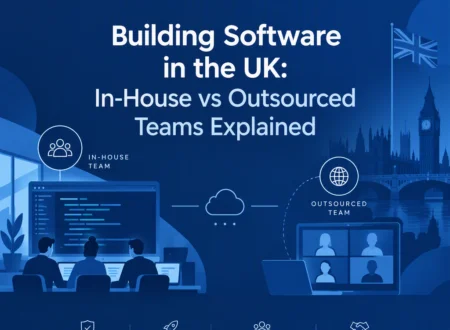


In 2026, IT staff augmentation has become a strategic model for companies that need to scale engineering capacity quickly without the delays and overhead of traditional hiring. As software delivery cycles get shorter and demand for specialized skills continues to rise, more businesses are turning to the right IT staff augmentation company for fast access to vetted developers, QA engineers, DevOps specialists, designers, and product experts.
Unlike full project outsourcing, staff augmentation allows companies to keep direct control over delivery while extending their internal team with external specialists. This model is especially valuable for startups, scaleups, and enterprises that need to accelerate product development, modernize legacy systems, launch digital initiatives, or fill temporary skill gaps.
The strongest staff augmentation partners do more than provide talent. They help clients onboard quickly, integrate specialists smoothly into existing workflows, maintain transparent communication, and scale teams up or down as needs evolve.
What Is IT Staff Augmentation?
IT staff augmentation is a hiring and delivery model where a company brings in external technology professionals to work alongside its internal team. The client manages priorities, product direction, backlog, and day-to-day collaboration, while the vendor handles sourcing, screening, contracting, and administrative support.
This model is commonly used for:
- speeding up product delivery
- filling skill gaps
- reducing recruitment lead time
- scaling teams for time-sensitive initiatives
- accessing specialized expertise on demand
How IT Staff Augmentation Works
A typical staff augmentation process looks like this:
1. The client defines requirements
The company outlines the roles, seniority, tech stack, availability, time zone expectations, and preferred engagement model.
2. The vendor shortlists candidates
The best providers pre-vet specialists for technical capability, communication, and team fit before presenting them.
3. Interviews and selection
The client interviews candidates and decides who joins the team.
4. Onboarding and integration
New team members are added to the client’s tools, meetings, repositories, workflows, and communication channels.
5. Ongoing delivery and scaling
The augmented team works as part of the client’s delivery process, with flexibility to scale capacity up or down as priorities change.
How We Selected These Companies
If you are looking for an IT staff augmentation company in 2026, there are several strong providers to consider. This list is designed to help buyers understand which companies stand out and why.
This is not an absolute ranking. It is our editorial selection based on professional judgment and the publicly visible strengths of each company. We selected providers based on criteria such as service focus, technical breadth, onboarding model, flexibility, delivery support, and the type of clients they are best suited to serve.
Our goal is to help businesses identify a partner that matches their delivery model, technical needs, and preferred way of working.

Top 5 IT Staff Augmentation Companies in 2026
1. RabIT
Best for: flexible software team extension with fast onboarding and strong integration into client teams.
RabIT Solutions stands out for companies that want to scale software delivery quickly without giving up control over product direction, engineering priorities, or day-to-day collaboration. Its IT staff augmentation model is designed for businesses that need external engineers to integrate into their existing team, workflows, and communication structure rather than operate as a separate outsourced unit.
RabIT supports both dedicated development teams for long-term initiatives and individual specialists for targeted skill gaps, giving clients flexibility based on project scope and delivery needs. Companies can scale the team up at any time by adding more specialists, reduce team size when demand changes, and choose between short-term or long-term cooperation depending on business priorities. RabIT also provides full-time and part-time specialists, making it easier to match team structure to budget, roadmap, and workload. Engagements can be extended when more support is needed or stopped when the project no longer requires additional capacity.
In addition to engineering talent, RabIT can also provide Project Management and Quality Assurance support, which makes it especially useful for companies that want to strengthen delivery predictability and release confidence alongside development capacity.
RabIT is particularly strong for startups, SMEs, and product-focused companies that need to move fast, extend delivery capacity, and avoid the delays of traditional hiring. Its core value lies in practical integration, fast team extension, and reliable support across changing delivery needs.
2. One Beyond
Best for: companies that want augmentation backed by consultative engineering support
One Beyond is a strong choice for businesses that need more than additional capacity. Its offer is built around access to trusted experts who can help deliver business-critical projects, overcome recruitment challenges, and add niche expertise when internal teams are under pressure.
The company emphasizes on-demand access to developers and software engineers, a broad range of technical specialisms, the ability to support both temporary placements and long-term partnerships, dedicated client management, performance reviews, robust data security processes, and UK data residency checks.
One Beyond is particularly well suited to mid-sized businesses and enterprises that value structure, technical depth, and a partner that can contribute beyond simple headcount expansion. It works especially well for organizations that need experienced engineers who can support critical initiatives with a consultative and dependable delivery approach.
3. GoodCore
Best for: businesses that want tailored engagement models and flexible commercial structures
GoodCore stands out for its emphasis on shaping engagements around the client’s required skill sets, roles, tech stack, and preferred seniority levels. Its model is built for companies that want the right talent matched to their needs without giving up control over delivery.
The company highlights flexibility as a defining part of its approach. Engagements are typically long-term, but teams can scale up or down based on changing project needs. Clients retain full control over the project, while external specialists work under their direct supervision and integrate with the in-house team.
GoodCore also presents a clear commercial structure, with monthly payments based on the resources allocated during each billing cycle. Combined with its visible focus on discovery, planning, iterative development, MVP-first thinking, and cost control, this makes it a strong option for businesses looking for a practical and commercially flexible software partner.
This makes GoodCore particularly suitable for SMEs and product teams that value close collaboration, adaptable team structure, and delivery support aligned with business realities when choosing an IT staff augmentation company.
4. Deazy
Best for: businesses that prioritize agility and flexible scaling
Deazy is positioned around one of the clearest value propositions in the market: customisable and flexible teams. Its strength lies in helping companies plug capability gaps quickly, scale team size up or down, and combine onshore and nearshore capacity as delivery needs change.
That makes Deazy particularly suitable for organizations that need to respond quickly to shifting roadmap priorities, want dynamic access to engineering capacity, need fast coverage for specific capability gaps, and prefer a more elastic resource model.
Deazy is a strong choice for companies that care most about agility, responsiveness, and the ability to adjust team structure without heavy operational friction. It is especially relevant for fast-moving digital initiatives where flexibility matters as much as technical capability.
5. Andersen
Best for: enterprises and larger organizations needing broad technical coverage and scalable delivery support
Andersen stands out for the breadth and maturity of its IT staff augmentation model. The company emphasizes fast access to a large talent pool, support across a wide range of technical and business roles, and a structured augmentation process.
Its core strengths include broad access to IT professionals across multiple disciplines, support across backend, frontend, QA, mobile, DevOps, architecture, business analysis, design, and AI-related roles, enterprise-level security, NDAs and IP protection, structured onboarding and integration, and a delivery model suited to larger and more complex environments.
Andersen is particularly strong for enterprise environments and larger-scale delivery needs where technical breadth, process maturity, and team scalability are critical. It is well suited to businesses that need to expand across multiple functions, access niche skills quickly, and work within more structured security and governance expectations.

What to Look for in an IT Staff Augmentation Partner Checklist
Use this checklist when evaluating providers:
- Do they have a strong technical vetting process?
- Can they onboard developers quickly?
- Do they communicate clearly and transparently?
- Can their specialists integrate smoothly into your existing workflows?
- Can they scale teams up or down as your needs change?
- Do they offer both short-term and long-term engagement flexibility?
- Can they provide full-time or part-time specialists?
- Do they support team stability and continuity over time?
- Can they work effectively within your tools, processes, and time zone?
- Do they offer additional delivery support such as QA or Project Management when needed?
What Influences IT Staff Augmentation Pricing?
IT staff augmentation pricing is usually influenced by several key factors, including the specialist’s seniority, the technology stack, the level of specialization required, the number of professionals needed, how quickly they are expected to start, engagement length, and whether the role is full-time or part-time. Rates may also vary based on team composition, time zone overlap, onboarding speed, and the level of additional support needed, such as QA, project management, or DevOps expertise. In most cases, the more specialized, urgent, and business-critical the requirement is, the higher the expected cost.
Who Benefits Most from IT Staff Augmentation?
IT staff augmentation can work for many types of businesses, but it is especially valuable for companies that need to scale delivery quickly without expanding permanent headcount too early. It gives organizations a practical way to add technical capacity, access specialized expertise, and keep delivery moving without the delays of traditional hiring.
It is often a strong fit for:
- startups that need to accelerate product development while staying lean and avoiding early overhiring
- scaleups that need to add engineering capacity quickly without slowing down delivery or putting pressure on internal hiring teams
- SMEs that want access to specialized skills without building a larger in-house team for every technical need
- enterprises that need extra support for modernization, migration, compliance-related work, or other time-sensitive initiatives
- product-focused companies that want to retain control over priorities, workflows, and day-to-day collaboration while extending team capacity
This model is particularly useful when a business already has internal product or engineering leadership in place, but needs additional developers, QA engineers, DevOps specialists, designers, or other technical professionals to maintain delivery speed. It can also help companies respond more effectively to roadmap changes, temporary skill gaps, and short-term increases in workload.
For many businesses, the main advantage of this model is flexibility. It allows them to add the right expertise when needed, respond faster to delivery pressure, and keep product ownership and execution closely aligned.
Red Flags to Watch For
Not every augmentation partner delivers the same level of quality. Common warning signs include:
- unclear vetting process
- no defined onboarding model
- poor communication structure
- rigid contracts
- no clarity around security or data access
- frequent developer churn
- weak role matching
- lack of accountability after placement
In staff augmentation, the failure point is often not sourcing. It is poor integration, poor communication, or weak retention.
Final Thoughts
IT staff augmentation in 2026 is no longer just a tactical hiring shortcut. It is a strategic way to scale software delivery, access specialized talent, and stay flexible in a fast-changing market.
The best providers are not simply the ones with the largest talent pool. They are the ones that can match the right specialists, integrate them quickly, communicate clearly, and support long-term delivery success.
Choosing the right IT staff augmentation company depends on your priorities. Some companies stand out for flexibility, some for consultative support, some for enterprise scale, and others for tailored engagement models. The best fit is the one that aligns with your delivery process, technical needs, and preferred way of working.
FAQ
When should a company choose IT staff augmentation instead of traditional hiring?
Staff augmentation is the right choice when a company needs to add capacity quickly, fill a temporary skill gap, accelerate a critical project, or avoid the long lead time of permanent hiring. It works especially well when internal engineering or product leadership is already in place.
Is IT staff augmentation suitable for startups?
Yes. Startups often use staff augmentation to speed up product development, access specialized expertise, and extend delivery capacity without committing to full-time hiring too early.
What should companies look for in an augmentation partner?
The most important factors usually include technical vetting quality, onboarding speed, communication, cultural fit, flexibility, security, retention, and the ability to integrate smoothly into the client’s workflows.
How quickly can augmented developers start?
Many providers respond within 1–2 business days, and selected specialists can often start within two weeks.
What does a typical IT staff augmentation process look like?
It typically starts with submitting a request and outlining the project needs, followed by candidate matching based on the required skills, roles, and availability. After that, the provider responds, shares suitable profiles, and schedules a consultation to discuss the goals, timeline, and next steps.
Can augmented specialists join an existing project already in progress?
Yes. In most cases, augmented developers, QA engineers, DevOps specialists, and other experts can join an existing project and integrate into the current team structure, workflows, and delivery process. This is one of the main advantages of staff augmentation, especially for companies that need to strengthen delivery without starting from scratch.
What engagement models are typically available in IT staff augmentation?
Most IT staff augmentation providers offer flexible engagement models, including full-time and part-time specialists, short-term support, and longer-term team extension. The available setup usually depends on the client’s delivery needs, budget, project stage, and required level of involvement.
Can a company hire one specialist only, or does staff augmentation require a full team?
Staff augmentation can work in both cases. Some companies need only one developer, QA engineer, designer, or DevOps specialist to fill a specific gap, while others build a larger dedicated team to support broader delivery goals. A good provider should be able to support both models depending on the client’s needs.